<html>
<head>
<title>More Writings by Neil Chethik</title>
<meta http-equiv="Content-Type" content="text/html; charset=iso-8859-1">
<script language="JavaScript">
<!--
function MM_preloadImages() { //v3.0
  var d=document; if(d.images){ if(!d.MM_p) d.MM_p=new Array();
    var i,j=d.MM_p.length,a=MM_preloadImages.arguments; for(i=0; i<a.length; i++)
    if (a[i].indexOf("#")!=0){ d.MM_p[j]=new Image; d.MM_p[j++].src=a[i];}}
}

function MM_swapImgRestore() { //v3.0
  var i,x,a=document.MM_sr; for(i=0;a&&i<a.length&&(x=a[i])&&x.oSrc;i++) x.src=x.oSrc;
}

function MM_findObj(n, d) { //v3.0
  var p,i,x;  if(!d) d=document; if((p=n.indexOf("?"))>0&&parent.frames.length) {
    d=parent.frames[n.substring(p+1)].document; n=n.substring(0,p);}
  if(!(x=d[n])&&d.all) x=d.all[n]; for (i=0;!x&&i<d.forms.length;i++) x=d.forms[i][n];
  for(i=0;!x&&d.layers&&i<d.layers.length;i++) x=MM_findObj(n,d.layers[i].document); return x;
}

function MM_swapImage() { //v3.0
  var i,j=0,x,a=MM_swapImage.arguments; document.MM_sr=new Array; for(i=0;i<(a.length-2);i+=3)
   if ((x=MM_findObj(a[i]))!=null){document.MM_sr[j++]=x; if(!x.oSrc) x.oSrc=x.src; x.src=a[i+2];}
}

function MM_openBrWindow(theURL,winName,features) { //v2.0
  window.open(theURL,winName,features);
}
//-->
</script>
</head>

<body bgcolor="#000000" onLoad="MM_preloadImages('images/booksense_on.gif','images/intro_on.gif','images/about_on.gif','images/speaking_on.gif','images/reader_on.gif','images/survey_on.gif','images/links_on.gif','images/auto_on.gif','images/amazon_on.gif','images/bn_on.gif')" text="#000000" link="#990000" vlink="#990000" alink="#990000">
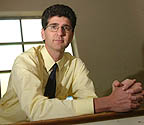
<div id="Layer1" style="position:absolute; left:354px; top:154px; width:149px; height:127px; z-index:1"><img src="images/nchet.jpg" width="144" height="125" border="1"></div>
<a name="top"></a>
<table width="650" border="0" cellspacing="0" cellpadding="0" align="left">
  <tr valign="top"> 
    <td height="3607"> 
      <table width="646" border="0" cellspacing="0" cellpadding="0" vspace="0" hspace="0" align="center">
        <tr> 
          <td colspan="3" valign="top"><a href="index.htm"><img src="images/masthead1.gif" width="100" height="77" border="0"><img src="images/masthead2.gif" width="100" height="77" border="0"><img src="images/masthead3.gif" width="100" height="77" border="0"><img src="images/masthead4.gif" width="100" height="77" border="0"><img src="images/masthead5.gif" width="100" height="77" border="0"><img src="images/masthead6.gif" height="77" border="0"></a><br>
            <a href="intro.html" onMouseOut="MM_swapImgRestore()" onMouseOver="MM_swapImage('intro','','images/intro_on.gif',1)"><img src="images/intro.gif" width="102" height="30" name="intro" border="0"></a><a href="about.html" onMouseOut="MM_swapImgRestore()" onMouseOver="MM_swapImage('about','','images/about_on.gif',1)"><img src="images/about.gif" width="129" height="30" name="about" border="0"></a><a href="speaking.html" onMouseOut="MM_swapImgRestore()" onMouseOver="MM_swapImage('speak','','images/speaking_on.gif',1)"><img src="images/speaking.gif" width="130" height="30" name="speak" border="0"></a><a href="reader.html" onMouseOut="MM_swapImgRestore()" onMouseOver="MM_swapImage('reader','','images/reader_on.gif',1)"><img src="images/reader.gif" width="121" height="30" name="reader" border="0"></a><a href="survey.html" onMouseOut="MM_swapImgRestore()" onMouseOver="MM_swapImage('survey','','images/survey_on.gif',1)"><img src="images/survey.gif" width="109" height="30" name="survey" border="0"></a><a href="index.htm" onMouseOut="MM_swapImgRestore()" onMouseOver="MM_swapImage('Image1','','images/links_on.gif',1)"><img src="images/links.gif" height="30" border="0" name="Image1"></a></td>
        </tr>
        <td width="59" valign="top"><img src="images/sunsleft.gif" height="144" width="59"><br>
          <img src="images/waterl1.gif" width="58" height="100"><br>
          <img src="images/waterl2.gif" width="58" height="133"> </td>
        <td width="397" valign="top" bgcolor="F8D96A"> 
          <table width="391" border="0" cellspacing="0" cellpadding="0">
            <tr> 
              <td width="13">&nbsp;</td>
              <td width="378">&nbsp;</td>
            </tr>
            <tr> 
              <td width="13">&nbsp;</td>
                <td width="378" valign="top" align="left"> 
                  <p><img src="images/runaround.gif" width="130" height="147" align="right"><font size="2" face="Arial, Helvetica, sans-serif"><b><font size="3">OTHER 
                    WRITINGS </font></b></font></p>
                  <p align="left"><font size="2" face="Arial, Helvetica, sans-serif">Following 
                    are samples of columns that Neil Chethik has written for a 
                    variety of newspapers and magazines. All are copyrighted by 
                    Neil Chethik. <a href="contact.html">Contact&nbsp;him</a> if you 
                    wish to reprint or excerpt.</font></p>
                  <table width="251" border="0" cellspacing="0" cellpadding="0" height="100">
                    <tr valign="top"> 
                      <td width="34" align="left"> 
                        <div align="left"><font size="2" face="Arial, Helvetica, sans-serif"><font size="3"><i><font size="2"><a href="#top"><img src="images/bullet.gif" width="31" height="21" border="0"><br>
                          </a></font></i></font></font></div>
                      </td>
                      <td width="217"> 
                        <p align="left"><font size="2" face="Arial, Helvetica, sans-serif"><font size="3"><i><font size="2"><a href="#son">Keeping 
                          Son Out of Scouts A Tough Call</a></font></i></font></font></p>
                        <p align="left"><font size="2" face="Arial, Helvetica, sans-serif"><font size="3"><i><font size="2"> 
                          </font></i></font></font></p>
                        </td>
                    </tr>
                    <tr valign="top"> 
                      <td width="34" align="left"> 
                        <div align="left"><font size="2" face="Arial, Helvetica, sans-serif"><font size="3"><i><font size="2"><a href="#top"><img src="images/bullet.gif" width="31" height="21" border="0"><br>
                          </a></font></i></font></font></div>
                      </td>
                      <td width="217"> 
                        <p align="left"><font size="2" face="Arial, Helvetica, sans-serif"><font size="3"><i><font size="2" face="Arial, Helvetica, sans-serif"><font size="3"><i><font size="2"><a href="#domestic">Domestic 
                          Violence on The Road</a></font></i></font></font><a href="#domestic"><font size="2"> 
                          </font></a></i></font></font></p>
                        <p align="left"><font size="2" face="Arial, Helvetica, sans-serif"><font size="3"><i> 
                          </i></font></font></p>
                      </td>
                    </tr>
                    <tr valign="top"> 
                      <td width="34" align="left"> 
                        <div align="left"><font size="2" face="Arial, Helvetica, sans-serif"><font size="3"><i><font size="2"><a href="#top"><img src="images/bullet.gif" width="31" height="21" border="0"><br>
                          </a></font></i></font></font></div>
                      </td>
                      <td width="217"> 
                        <p align="left"><font size="2" face="Arial, Helvetica, sans-serif"><font size="3"><i><font size="2" face="Arial, Helvetica, sans-serif"><font size="3"><i><a href="#prep"><font size="2">Preparing 
                          for The Death of A Loved One</font></a></i></font></font><a href="#prep"><font size="2"></font></a></i></font></font></p>
                        <p align="left"><font size="2" face="Arial, Helvetica, sans-serif"><font size="3"><i> 
                          </i></font></font></p>
                      </td>
                    </tr>
                    <tr valign="top"> 
                      <td width="34" align="left" height="10"> 
                        <div align="left"><font size="2" face="Arial, Helvetica, sans-serif"><font size="3"><i><font size="2"><a href="#top"><img src="images/bullet.gif" width="31" height="21" border="0"><br>
                          </a></font></i></font></font></div>
                      </td>
                      <td width="217" height="10"> 
                        <p><font size="2" face="Arial, Helvetica, sans-serif"><font size="3"><i><font size="2" face="Arial, Helvetica, sans-serif"><font size="3"><i><font size="2"><a href="#what">What 
                          A Difference A Generation Makes</a><a name="son"></a></font></i></font></font></i></font></font></p>
                        <p><font size="2" face="Arial, Helvetica, sans-serif"><font size="3"><i><font size="2"> 
                          </font></i></font></font></p>
                      </td>
                    </tr>
                  </table>
                  <p><br>
                    <font size="2" face="Arial, Helvetica, sans-serif"><font size="3"><i><font size="2"> 
                    </font></i></font> <font size="3"><i><b>KEEPING SON OUT OF 
                    SCOUTS A&nbsp;TOUGH&nbsp;CALL</b></i></font><br>
                    By Neil Chethik <br>
                    <br>
                    I relished being a Scout. Thirty-five years later, I still 
                    remember standing at our full-length mirror, admiring the 
                    crisply ironed Cub Scout slacks, deep-blue cap, and yellow 
                    kerchief. Once a week, I&#146;d wear the ensemble to school 
                    with pride, then join my pack-mates for snacks and adventures.<br>
                    <br>
                    Through elementary school, I recited oaths, climbed the merit 
                    ladder, and came to love the woods on autumn nights. Under 
                    the command of a couple of den-dads, I learned to kindle a 
                    fire, whittle a stick, tell a story, help a friend.<br>
                    <br>
                    Given this, I shouldn&#146;t be surprised about the conflict 
                    I felt over a leaflet my first-grade son brought home from 
                    school a few weeks ago. On plain white paper, with a typical 
                    lack of fanfare, it invited my son to become a Cub Scout. 
                    <br>
                    <br>
                    Five years ago, I would have encouraged most any boy to take 
                    up this offer. These days, however &#150; following the decision 
                    by the Boy Scouts of America, which operates the Cub Scouts, 
                    to explicitly exclude gays &#150; I&#146;ve found myself more 
                    cautious. In reaching a decision on whether to enroll my son, 
                    I&#146;ve had to balance my high opinion of the Scouts with 
                    my concern about the impact its no-gays policy might have 
                    on him.<br>
                    <br>
                    On a purely ethical level, my decision rides on the answers 
                    to two questions: First, is the Scouts&#146; policy unfairly 
                    discriminatory? And, second, if it is, is that enough for 
                    me to steer my 7-year-old away from an organization that offers 
                    so many apparent benefits?<br>
                    <br>
                    The first question is the easier one. Do the Scouts unfairly 
                    discriminate? To me, unfair discrimination is bias against 
                    another person based on a characteristic over which that person 
                    does not have control.<br>
                    <br>
                    The question of whether gay people choose their sexual orientation 
                    is not as clear-cut as whether any of us chooses our race 
                    or national heritage. So I ask myself: Did I choose my sexual 
                    orientation? The answer is no, I didn&#146;t. Gradually, through 
                    my childhood and adolescence, I awakened to a set of sexual 
                    inclinations that only later did I learn were broadly defined 
                    as heterosexual. I have seen no evidence that gay people come 
                    to their orientation in any other way.<br>
                    <br>
                    Could I have switched my orientation? Sure, I could have forced 
                    myself to try. But I doubt that my basic drives would have 
                    changed much. Instead, I suspect that I would have been miserable, 
                    and frankly perplexed that nature would endow me with such 
                    a compelling way to express love for another human being &#150; 
                    and then demand that I abandon it.<br>
                    <br>
                    Of course, regardless of whether a gay person has a choice 
                    in his sexual orientation, I wouldn&#146;t want to send my 
                    son into an unsafe environment. I&#146;d want to be sure that 
                    the Scouts had policies and procedures in place to keep child-abusers 
                    and pedophiles away from the children in its charge. But ejecting 
                    all gays is diversionary; the evidence is convincing that 
                    gays are no more likely than heterosexuals to hurt children. 
                    <br>
                    <br>
                    So if I believe the Scouts are unfairly discriminating, should 
                    I still allow my son to participate, if that&#146;s what he 
                    wants? Should I work from the inside for change in the anti-gay 
                    policy? Should I try to be part of a solution?<br>
                    <br>
                    I have struggled with these questions since receiving that 
                    Scouting leaflet. In the end, however, I find that to give 
                    my son the experience of Scouting, I&#146;d have to risk his 
                    well-being.<br>
                    <br>
                    I choose to imagine what would happen if my son one day discovered 
                    that he is gay. If he were a Scout at that point, he would 
                    already have gotten the message that he is morally inferior 
                    to heterosexuals. And he&#146;d be faced with a troublesome 
                    choice: Either hide a significant part of himself from the 
                    outside world, or face banishment from his chosen community.<br>
                    <br>
                    I know I can&#146;t protect my son from everything, but I 
                    find that I can&#146;t set him up for that choice.<br>
                    <br>
                    Scouting has so much to offer. It&#146;s fun, challenging, 
                    and a great teacher of the values of service, courtesy, and 
                    respect for nature. However, until the Scouts can add inclusion 
                    to its ethical core, I&#146;ll have to find other ways for 
                    my son to experience the pleasure of the pack.<br>
                    </font></p>
                  <p align="center"><font size="2"><a href="#top">Back to top</a><a name="domestic"></a></font></p>
                  <p align="left"><font size="2" face="Arial, Helvetica, sans-serif"> 
                    <br>
                    <br>
                    <font size="3"><i><b>DOMESTIC VIOLENCE ON THE ROAD</b></i></font><br>
                    By Neil Chethik<br>
                    <br>
                    I can&#146;t forget the moment she almost launched herself 
                    from that moving car.<br>
                    <br>
                    One day last summer, I was driving southbound on one of the 
                    main roads in my hometown. My son and his friend, both five-year-olds, 
                    were in the back seat of my car, laughing and clowning following 
                    an afternoon at a local swimming pool. We were taking my son&#146;s 
                    friend back home.<br>
                    <br>
                    Suddenly, in the far right lane up ahead, I noticed a man 
                    inching along in a Jeep. It was one of those Jeeps with no 
                    top, no doors, no windows, so I could see the driver clearly 
                    as I approached. He was a big fellow, nearly bald, wearing 
                    a white t-shirt over broad shoulders. <br>
                    <br>
                    As I passed him on his left, I noticed why he was driving 
                    so slowly: He was talking with a woman on the sidewalk. I 
                    figured that he knew the woman and was checking to see if 
                    she wanted a ride, or that he was asking directions.<br>
                    <br>
                    When I glanced into my rear-view mirror, however, I saw the 
                    man, who looked to be about 40, abruptly stop the Jeep, scurry 
                    around the back of it, and grab the woman hard by the arm. 
                    As she resisted weakly, he tugged her to the passenger side 
                    of his vehicle, pushed her onto the front seat, and scrambled 
                    around to the driver&#146;s side. Then, with two people on 
                    board now, the Jeep lurched away from the curb and headed 
                    in my direction.<br>
                    <br>
                    By this time, I was stopped at a red light. I continued to 
                    watch in the rear-view mirror as the Jeep swerved erratically 
                    from the right lane into the center one (my lane) and then 
                    to the lane immediately to my left.<br>
                    <br>
                    The light changed to green, and as I started my car moving 
                    again, I saw out of my side-view mirror that the Jeep was 
                    approaching fast to the left of me. Because of its weaving 
                    path, I was focused on the vehicle itself, and didn&#146;t 
                    notice, until he passed by my window, that the man in the 
                    t-shirt was pounding on the woman with his right hand as he 
                    struggled to steer the Jeep with his left.<br>
                    <br>
                    My reaction was instinctive. I started honking my horn. I 
                    kept honking, almost, it seemed, in time with the man&#146;s 
                    steady drumbeat upon the woman. I&#146;m not naive about domestic 
                    violence, but I found it shocking that a man would be pummeling 
                    a woman while traveling 30 miles per hour in an open vehicle 
                    on a busy stretch of one of the busiest roads in Lexington.<br>
                    <br>
                    The man in the t-shirt apparently realized I was honking at 
                    him, and he slowed his vehicle so it was immediately to the 
                    left of mine. We were both still moving, now in lockstep, 
                    probably at about 25 miles per hour.<br>
                    <br>
                    It was here that I got my closest look at the woman. She looked 
                    to be in her mid-30s, with dark, almond-shaped eyes, puffy 
                    from tears. She looked at me pleadingly; without a seat belt, 
                    she was able to turn her whole body in my direction. Then 
                    I saw her feet, in brown sandals, slide toward the edge of 
                    the Jeep where the door would have been. For a long moment, 
                    her toes gripped the steel edge of the doorway, and it seemed 
                    that in her desperation, she might actually try to jump out 
                    of her seat.<br>
                    <br>
                    Then I looked up at the man. His wide eyes were deeply set 
                    in a face full of rage. And that rage now was directed at 
                    me. With expletives deleted, this is the essence of what he 
                    was saying: Stop your car, fella! I want to kick your butt!<br>
                    <br>
                    At that moment, I remembered that I had two children in the 
                    back seat. And instinct took over again. I twisted the steering 
                    wheel to the right, and at my next opportunity, turned down 
                    a side street, away from the raving man.<br>
                    <br>
                    &#147;This isn&#146;t the way to my house,&#148; my son&#146;s 
                    friend chirped pleasantly from the backseat. Apparently, wrapped 
                    up in their clowning, the kids had been oblivious to all that 
                    had just occurred &#150; except for the wrong turn. &#147;I 
                    know,&#148; I answered, and I drove, shaken, to the child&#146;s 
                    home. <br>
                    <br>
                    It&#146;s been six months since the incident. Since then, 
                    I&#146;ve replayed it dozens of times in my head. Though I 
                    usually feel angry and helpless, I don&#146;t second-guess 
                    my decision to steer clear of that Jeep. To expose children 
                    to such an irrationally violent person would have been foolish.<br>
                    <br>
                    But what if those kids hadn&#146;t been with me? What would 
                    I have done then? What <i>should</i> I have done?<br>
                    <br>
                    Last week, I posed that latter question to the chief detective 
                    at my local police department&#146;s family-abuse unit. He 
                    told me that no member of the public should ever intercede 
                    in a domestic-violence situation (of which there were 5,850 
                    in Fayette County last year), and that I probably shouldn&#146;t 
                    even have honked my horn. <br>
                    <br>
                    The most effective thing I could have done, the detective 
                    said, would have been to write down the make, model and license-plate 
                    number of the Jeep, as well as a description of the man, the 
                    woman, and their location. Then, I should have sought out 
                    a pay phone and called 911. In such cases, the detective assured 
                    me, &#147;We respond immediately.&#148;<br>
                    <br>
                    I&#146;m certainly better prepared for any future incidents 
                    of this kind. But I imagine it&#146;ll be quite awhile before 
                    the image fades of that woman in the Jeep, her dark eyes puffy, 
                    her toes curled in her sandals, as she considered launching 
                    herself from a moving vehicle onto the busiest street in town.</font></p>
                  <p align="center"><font size="2"><a href="#top">Back to top</a><a name="prep"></a></font></p>
                  <p align="left"><font size="2" face="Arial, Helvetica, sans-serif"> 
                    <br>
                    <br>
                    <font size="3"><i><b>PREPARING FOR THE DEATH OF A LOVED ONE</b></i></font><br>
                    By Neil Chethik<br>
                    <br>
                    How can we prepare for the death of a loved one?<br>
                    <br>
                    That was among the key questions that drew nearly 20 million 
                    Americans to their television sets last fall to watch Bill 
                    Moyers&#146; special, &#147;On Our Own Terms.&#148; The six-hour 
                    PBS documentary explored how we imagine dying, how we ready 
                    ourselves for it, and how we actually get it done.<br>
                    <br>
                    The large audience was good news. On the heels of the huge 
                    success of Mitch Albom&#146;s Tuesdays With Morrie, a book 
                    about the death of Albom&#146;s mentor, it indicates that 
                    we Americans are beginning to face death more directly.<br>
                    <br>
                    Our long-time aversion to confronting death is understandable. 
                    Nonetheless, it has served not to insulate us from pain, but 
                    to intensify it. By failing to acknowledge that a loved one 
                    is dying, for example, we compromise our ability to bring 
                    our relationship with that person to a graceful close. The 
                    result, too often, is that our normal grief after a death 
                    is aggravated by guilt and regret.<br>
                    So how can we prepare for the loss of a loved one?<br>
                    <br>
                    I recently finished writing a book on how sons deal with the 
                    deaths of their fathers. In the process, I was able to ask 
                    this very question of 376 men. How did they prepare themselves 
                    for the loss of their fathers? <br>
                    <br>
                    Many, of course, did not prepare, or could not. They were 
                    estranged from their fathers, not in regular communication, 
                    or the father died suddenly. But well over half said they 
                    did prepare in some way. <br>
                    <br>
                    One important preparation strategy involved talking with the 
                    dying person about the death. While less than a third of the 
                    men I surveyed talked with their fathers about the death, 
                    more than 80 percent of those who did reported that it helped 
                    them in recovering from the loss.<br>
                    <br>
                    How does it help? In talking with his father, a motorcycle 
                    mechanic I interviewed learned for the first time that his 
                    dad was not afraid of death. The father explained how he&#146;d 
                    had a premonition that after death, he&#146;d go through a 
                    &#147;doorway&#148; into eternal acceptance and love. The 
                    son recalled: &#147;When (my father) died, I was sad, yet 
                    I felt a sense of peace knowing that he wanted us to let him 
                    go into that doorway.&#148;<br>
                    <br>
                    Other sons said talking about the death allowed them to learn 
                    what kind of medical treatment he wanted late in life, what 
                    kind of funeral he wanted, and what he wanted done with his 
                    material possessions. Knowing these wishes, the sons were 
                    able to make decisions in a way that eased their own grieving.<br>
                    <br>
                    Another method of preparing for a loved one&#146;s death is 
                    to take part in the dying person&#146;s late-life care. The 
                    form of care varied widely in style and duration. Frank Hernandez 
                    offered perhaps the most comprehensive care among the sons 
                    I interviewed. He took his father into his house for the last 
                    two-and-a-half years of the older man&#146;s life. <br>
                    <br>
                    Frank was thirty-two years old at the time, recently divorced, 
                    the father of two, and less than thrilled to be opening his 
                    home to a man he had not known well for most of his life. 
                    The son felt an obligation, he told me, because in the Hispanic 
                    culture, it is traditional that young people will provide 
                    for elders in need.<br>
                    <br>
                    For Frank, the job of caring was not a major burden at first. 
                    But after a few months, as his father&#146;s emphysema worsened, 
                    Frank became responsible for feeding, medicating, and even 
                    bathing his father each day. There were many times that he 
                    resented his responsibilities. However, when I met with him 
                    at his suburban St. Louis home eight years after the death, 
                    Frank said he had no regrets: &#147;It was an important period 
                    because I had been away for a few years. I&#146;d kind of 
                    lost fellowship with my father. He was more of a stranger 
                    than a father.... It was a time for me and my dad to get to 
                    know each other again. I value that time we had.&#148;<br>
                    <br>
                    Shawn Martel also found value in caring for his dad. Shawn&#146;s 
                    father had battled prostate cancer for many months. It was 
                    in the last thirty days of the father&#146;s life that Shawn, 
                    then a 47-year-old college administrator, began visiting his 
                    dad almost daily at the hospital. In his father&#146;s last 
                    twenty hours, Shawn and his older brother stayed at the bedside, 
                    moistening their father&#146;s lips, wiping his forehead, 
                    reminiscing about his life. <br>
                    <br>
                    Shawn&#146;s father was comatose at the time. But, as the 
                    brothers told stories about the father&#146;s intense work 
                    ethic, his off-beat vacation destinations, his fear of flying, 
                    his love of fishing, and other memories, Shawn sensed that 
                    the dying man was enjoying himself, &#147;and wasn&#146;t 
                    ready to go while the stories were good.&#148;<br>
                    Shawn said he was with his father until just moments before 
                    the end. &#147;I always had worried how I would react in the 
                    face of death, but I was surprised at the calming effect it 
                    had,&#148; Shawn told me. &#147;I lost some of my own fear 
                    in the process. He died quite peacefully, as far as I saw. 
                    I felt at peace, and I was very, very content that I had been 
                    there.&#148;<br>
                    <br>
                    In the weeks after the loss, to comfort himself, Shawn would 
                    remember moments from those last days in the hospital: &#147;I&#146;m 
                    very happy about the fact that at one point in his illness, 
                    I kissed the top of his head and told him I loved him. We 
                    didn&#146;t exchange emotions very readily, but I&#146;m glad 
                    I had the opportunity. That was very satisfying and healing. 
                    I would regret it if I hadn&#146;t obeyed that impulse.&#148;<br>
                    <br>
                    Gary Isikoff, the union official who volunteered at a hospice, 
                    also enjoyed a new kind of affection with his father in the 
                    final days. Gary recalled: &#147;My dad was not a hugger. 
                    The most physical contact we would have was a warm handshake. 
                    A real blessing during that last month in the hospital was 
                    that we both felt more free to display affection. It was unspoken. 
                    I would kiss him on the forehead. I massaged his feet with 
                    lotion. He liked that and so did I. That helped me make a 
                    healing connection to my dad that had been missing since I 
                    was a small child.&#148;<br>
                    <br>
                    In my survey, more than 90 percent of those who had cared 
                    for their fathers reported that it helped them in their recovery 
                    after the loss. <br>
                    <br>
                    Perhaps the most important &#150; and most difficult &#150; 
                    preparation for a loved one&#146;s death is ensuring that 
                    one&#146;s relationship with the dying person is complete. 
                    Sometimes, this requires direct expressions of long-held resentments. 
                    The anger is released so the survivor can go on with life 
                    unburdened by it.<br>
                    <br>
                    Surprisingly, however, many of the men I spoke with found 
                    their peace by expressing not anger, but gratitude. <br>
                    <br>
                    One son, who had long resented his father for being uninvolved 
                    in the son&#146;s life, wrote a letter to his dying father. 
                    &#147;Dear Dad,&#148; it began, &#147;I understand you did 
                    the best you could. All I want to do is say: Thank you for 
                    being my father.&#148; The two men were able to talk openly 
                    in the father&#146;s dying days, and the son told me he felt 
                    at peace when the death occurred.<br>
                    <br>
                    &#147;One by one, we die,&#148; Moyers intones in his PBS 
                    show. We can&#146;t predict exactly when death will come, 
                    how it will occur, or what will happen afterwards. But we 
                    can begin to absorb the truth of our mortality, and by acting 
                    out of that truth, enrich the precious time we have.</font></p>
                  <p align="center"><font size="2"><a href="#top">Back to top</a><a name="what"></a></font></p>
                  <p align="left"><font size="2" face="Arial, Helvetica, sans-serif"><br>
                    <br>
                    <font size="3"><i><b>WHAT A DIFFERENCE A GENERATION MAKES</b></i></font><br>
                    By Neil Chethik<br>
                    <br>
                    Forty years ago, John F. Kennedy prodded America&#146;s conscience 
                    by suggesting that we ask what we could do for our country, 
                    not what it could do for us. In the gleaming January cold, 
                    he called Americans to look beyond their personal needs and 
                    wants, and to engage in the building of great nation. <br>
                    <br>
                    What a difference a generation makes. As we head into the 
                    home stretch of the 2000 presidential race, the resounding 
                    sound-bite of the campaign is one that&#146;s just a bit less 
                    compelling: Are you better off now than you were eight years 
                    ago? Or, translated into voter-ese: What&#146;s in it for 
                    me?<br>
                    <br>
                    Perhaps in these flush times for America, we should remind 
                    ourselves of the state of the rest of the world. According 
                    to the AFL-CIO, the assets of the three richest people on 
                    Earth exceed the total annual incomes of the 600 <i>million</i> 
                    people living in the world&#146;s 48 poorest countries. In 
                    other words, if you pooled the resources of the least fortunate 
                    10 percent of the human population, it probably wouldn&#146;t 
                    match that of Bill Gates and a couple of his right-hand men.<br>
                    <br>
                    This is no statistical aberration. In 1960, according to the 
                    U.N., the wealthiest one-fifth of the world&#146;s people 
                    &#150; that includes me, and probably you &#150; earned $30 
                    for every $1 earned by the poorest one-fifth; by 1997, that 
                    disparity had grown to $74 to $1. Today, while America battles 
                    obesity, 800 million people in the world are undernourished.<br>
                    <br>
                    We haven&#146;t heard word one about this from those who would 
                    lead the free world in the new century. They&#146;re betting 
                    their political lives &#150; not to the actual lives of a 
                    good many fellow humans in far-away lands &#150; that American 
                    voters don&#146;t care what&#146;s happening beyond their 
                    bank accounts. <br>
                    <br>
                    Let&#146;s prove the candidates wrong.<br>
                    <br>
                    The U.S. is not a theocracy, but it has a religious base. 
                    Most of us say we believe in God. Even those who supported 
                    President Clinton&#146;s policies were offended by his obvious 
                    breach of personal morality.<br>
                    <br>
                    But religion is not only about personal morals; it&#146;s 
                    about collective ones as well. Every religion I know of has 
                    a social-justice mission. Even for us non-Christians, perhaps 
                    the key question in this campaign should not be, Are you better 
                    off?, but rather, What would Jesus do?<br>
                    <br>
                    It seems obvious what Jesus would do if he were wandering 
                    the globe on his 2000<sup>th</sup> birthday. And it wouldn&#146;t 
                    be to crusade for tax cuts for the wealthy, or even for the 
                    American middle class. <br>
                    <br>
                    With Tiger Woods-like intensity, Jesus would urge us all toward 
                    lives of dignity.<br>
                    <br>
                    For those of us in the top one-fifth in wealth in the world, 
                    dignity implies a certain moderation in lifestyle. I&#146;m 
                    not suggesting that he&#146;d ask us to take vows of poverty. 
                    But he&#146;d certainly point out the fallacy of our more-is-better 
                    doctrine, and ask us to ask ourselves: What is enough?<br>
                    <br>
                    Then, with our financial &#147;surpluses&#148; &#150; or with 
                    the time we freed by not pursuing a more-than-enough lifestyle 
                    &#150; we could do as Jesus always did, and surely would again: 
                    search for suffering, and help to end it.<br>
                    <br>
                    I know, we&#146;re never going to end suffering. We should 
                    acknowledge that fact going in. But we don&#146;t have to 
                    let it paralyze us. <br>
                    <br>
                    We can think of ourselves as relay racers. Our activist predecessors, 
                    including Jesus, ran their leg of the race, and passed the 
                    baton to us. Now it&#146;s our turn to run. Eventually, we 
                    will tire, and pass the baton to the next generation. Our 
                    obligation is not to succeed; it is simply to participate.<br>
                    <br>
                    John F. Kennedy had only a short time in office, and yet his 
                    legacy is enormous. That&#146;s because he called us toward 
                    our better selves. He asked us to count our blessings and 
                    strengthen our country. It&#146;s time for a new leader who 
                    will challenge Americans to raise the stakes even higher &#150; 
                    to look at the whole world, and ask what we can do for it.</font></p>
                  <p align="center"> <br>
                    <font size="2"><a href="#top">Back to top</a></font><br>
                    <br>
                  </p>
                  <p>&nbsp;</p>
                <p align="center"><b><font face="Arial, Helvetica, sans-serif" size="2"><a href="intro.html">Book 
                  Excerpt</a> | <a href="about.html">About the Author</a> | <a href="speaking.html">Speaking 
                  Schedule</a><br>
                    <a href="reader.html">Reader Feedback</a> | <a href="survey.html">Survey 
                    Results</a> | <a href="index.htm">Home</a></font></b></p>
                <p align="center">&nbsp;</p>
                <p align="center">&nbsp;</p>
              </td>
            </tr>
          </table>
        </td>
          <td width="190" valign="top"> 
            <div align="left"><img src="images/sunsr1.gif" height="144"><img src="images/sunsr2.gif" width="50" height="144"><img src="images/sunsr3.gif" width="50" height="144"><img src="images/sunsr4.gif" width="33" height="144"><br>
              <img src="images/waterr1b.gif" width="184" height="20"><img src="images/avail.gif" height="81"><br>
              <img src="images/buy.gif" height="50" border="0"><br>
              <a href="#" onMouseOut="MM_swapImgRestore()" onMouseOver="MM_swapImage('auto','','images/auto_on.gif',1)"><img src="images/auto.gif" width="184" height="37" name="auto" border="0" onMouseDown="MM_openBrWindow('auto_popup.html','','scrollbars=yes,width=300,height=300')"></a> 
              <a href="http://www.amazon.com/exec/obidos/ASIN/0786865326/fatherloss-20" onMouseOut="MM_swapImgRestore()" onMouseOver="MM_swapImage('Image2','','images/amazon_on.gif',1)" target="new"><img src="images/amazon.gif" width="184" height="24" border="0" name="Image2"></a><br>
              <a href="http://service.bfast.com/bfast/click?bfmid=2181&amp;sourceid=38170947&amp;bfpid=0786865326&amp;bfmtype=book" onMouseOut="MM_swapImgRestore()" onMouseOver="MM_swapImage('Image3','','images/bn_on.gif',1)" target="new"><img src="images/bn.gif" width="184" height="26" border="0" name="Image3"></a><br>
              <a href="http://www.booksense.com" onMouseOut="MM_swapImgRestore()" onMouseOver="MM_swapImage('Image4','','images/booksense_on.gif',1)" target="new"><img src="images/booksense.gif" width="184" height="37" border="0" name="Image4"></a> 
              <a href="http://www.booksense.com" onMouseOut="MM_swapImgRestore()" onMouseOver="MM_swapImage('Image4','','images/booksense_on.gif',1)" target="new"><br>
              <font size="2" face="Arial, Helvetica, sans-serif"></font></a><a href="http://www.booksense.com" onMouseOut="MM_swapImgRestore()" onMouseOver="MM_swapImage('Image4','','images/booksense_on.gif',1)" target="new"><font size="2" face="Arial, Helvetica, sans-serif"></font></a><font size="2" face="Arial, Helvetica, sans-serif"><a href="contact.html"> 
              </a></font>
              <p align="center"><a href="contact.html"><font size="3" face="Arial, Helvetica, sans-serif" color="#FFCC66"><b>Email 
                the author</b></font></a></p>
              <p align="center"><a href="writings.html"><font size="3" face="Arial, Helvetica, sans-serif" color="#FFCC66"><b>More 
                writings<br>
                by Neil Chethik</b></font></a></p>
            </div>
            </td>
        </tr>
      </table>
    </td>
  </tr>
</table>
</body>
</html>